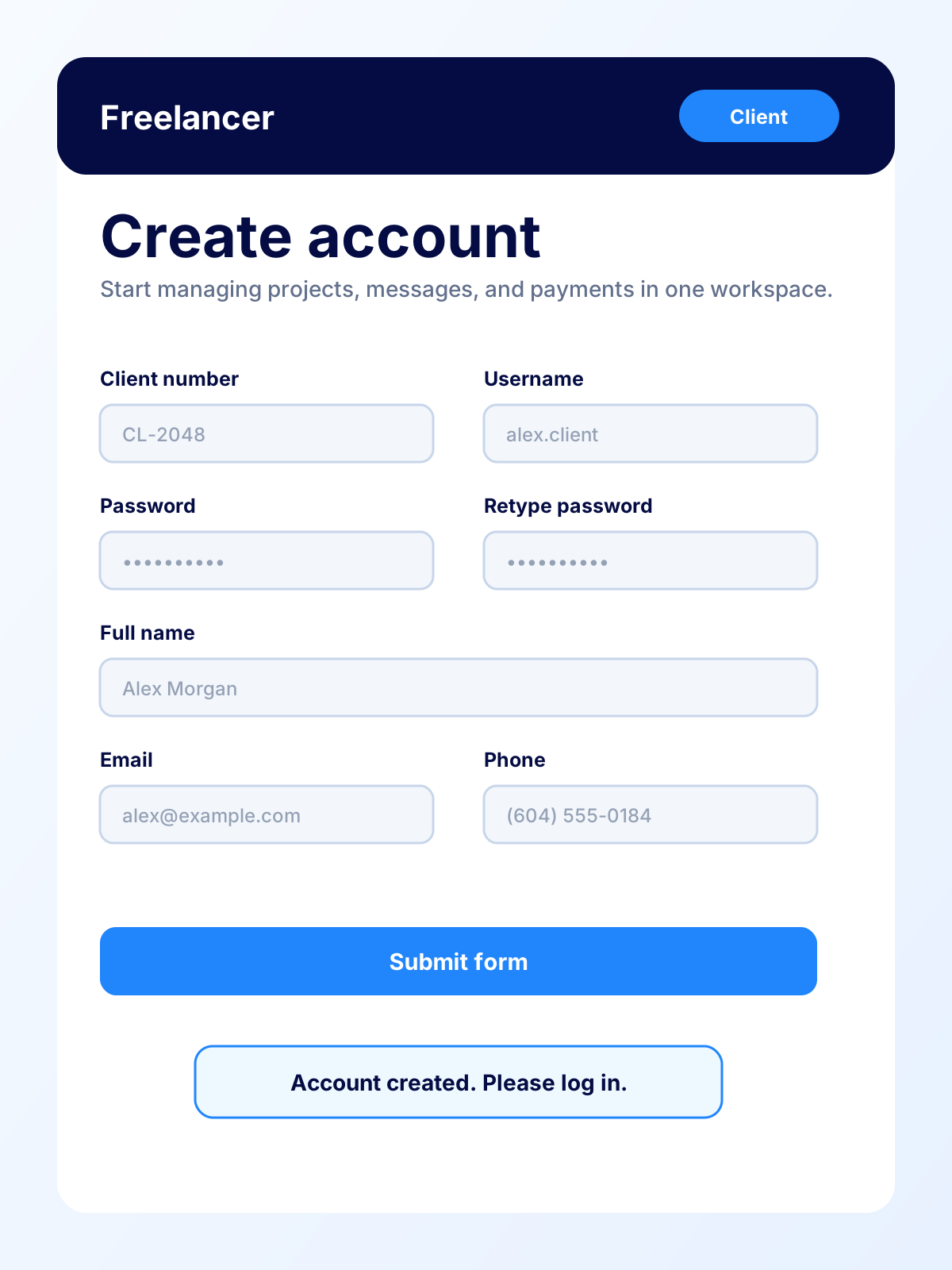
The Project
Our platform is designed to create a seamless, engaging, and professional experience for both freelancers and clients. By centralizing communication, project progress, and payment management into one transparent system, users can efficiently manage multiple projects at once while maintaining clear collaboration, accountability, and trust throughout the entire workflow.
The Beginning
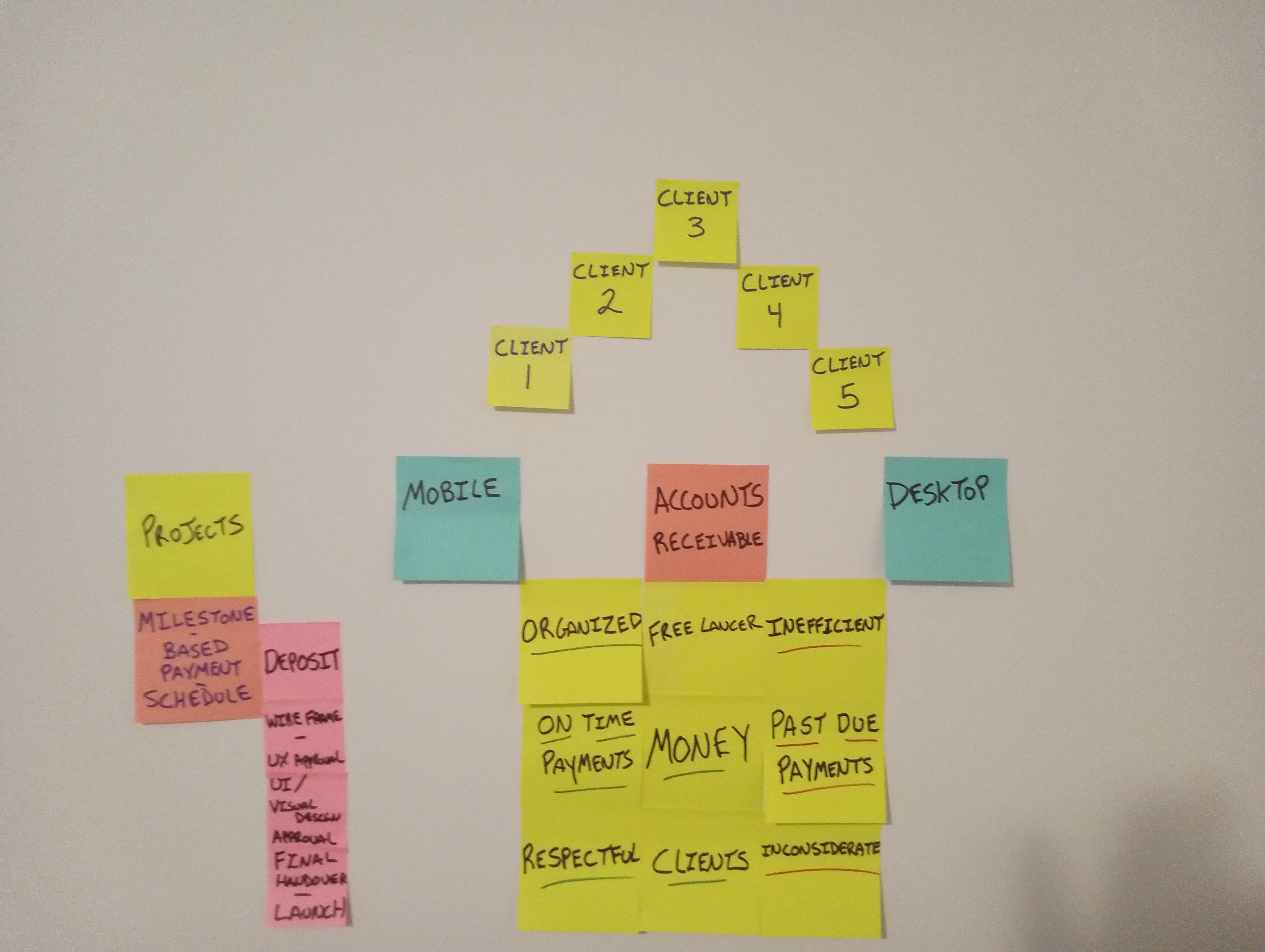
This project began as a solution to a common challenge faced by freelancers and clients alike: managing multiple projects while keeping communication, deadlines, and deliverables organized. The goal was to create a centralized platform that simplifies collaboration by bringing project briefs, timelines, messaging, and payment tracking into one streamlined experience.
The Development Process
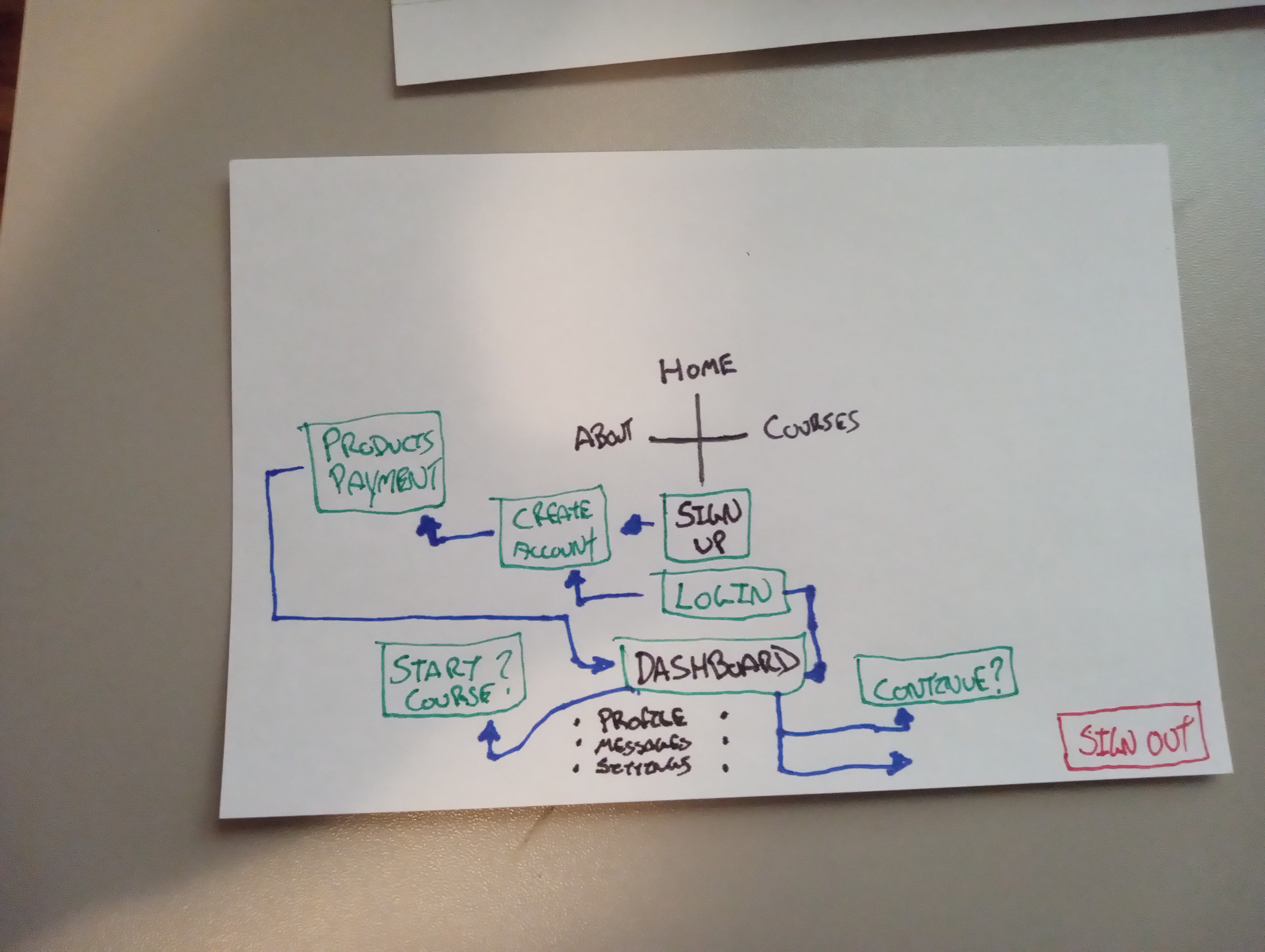
Early concepts were sketched and refined through quick feedback cycles to better understand user needs and identify areas for improvement. Key priorities included simplifying the sign-up process, improving communication clarity, and creating a straightforward payment workflow that felt intuitive for both freelancers and clients.
Make it Bigger and Better?
As the project started to grow, the focus shifted toward figuring out which features actually helped users stay organized and complete projects more efficiently. Ideas like milestone tracking, simple rating systems, and improved search features were explored to make the platform feel more useful and easier to navigate for both freelancers and clients.
The Implementation Phase
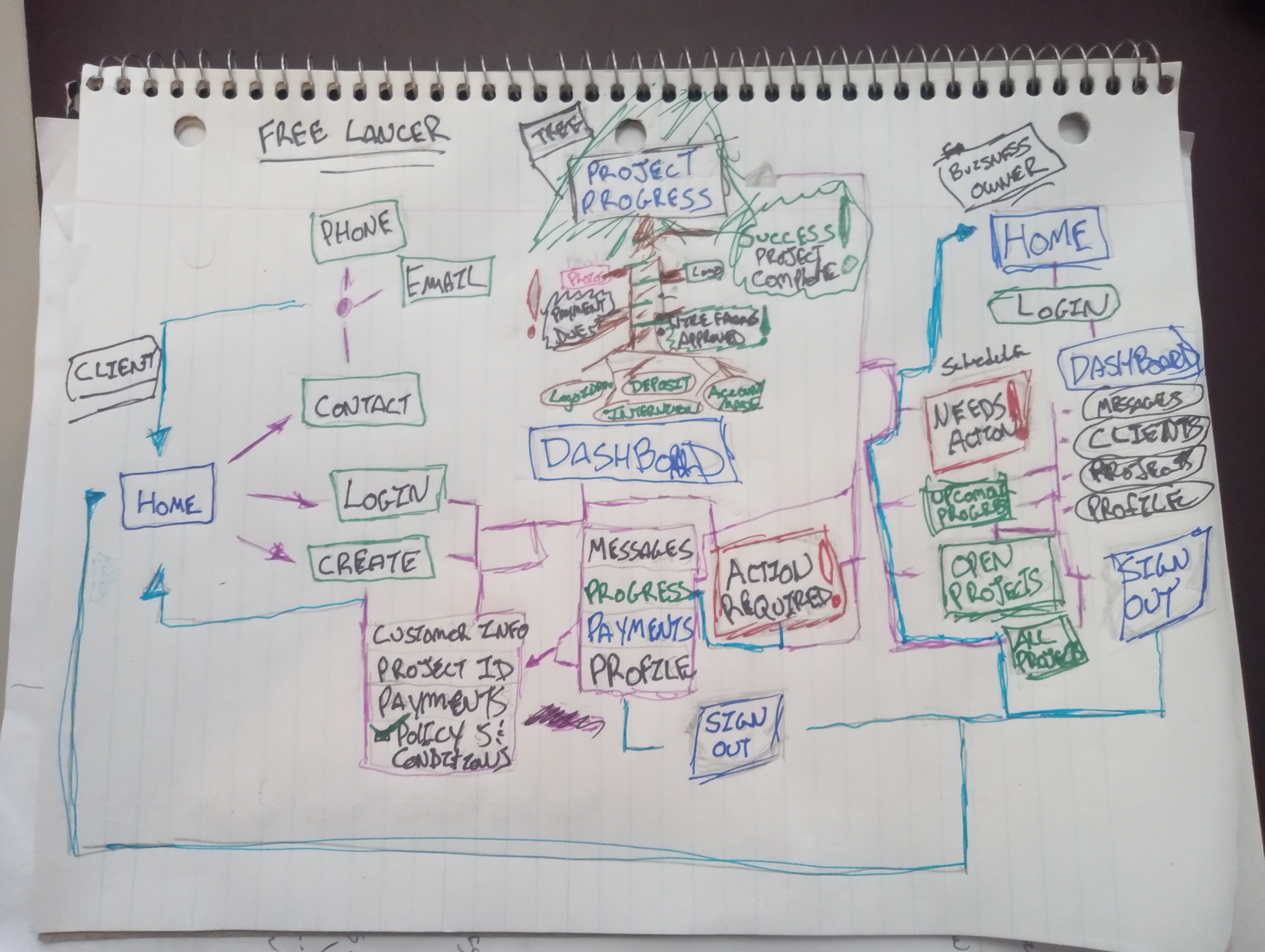
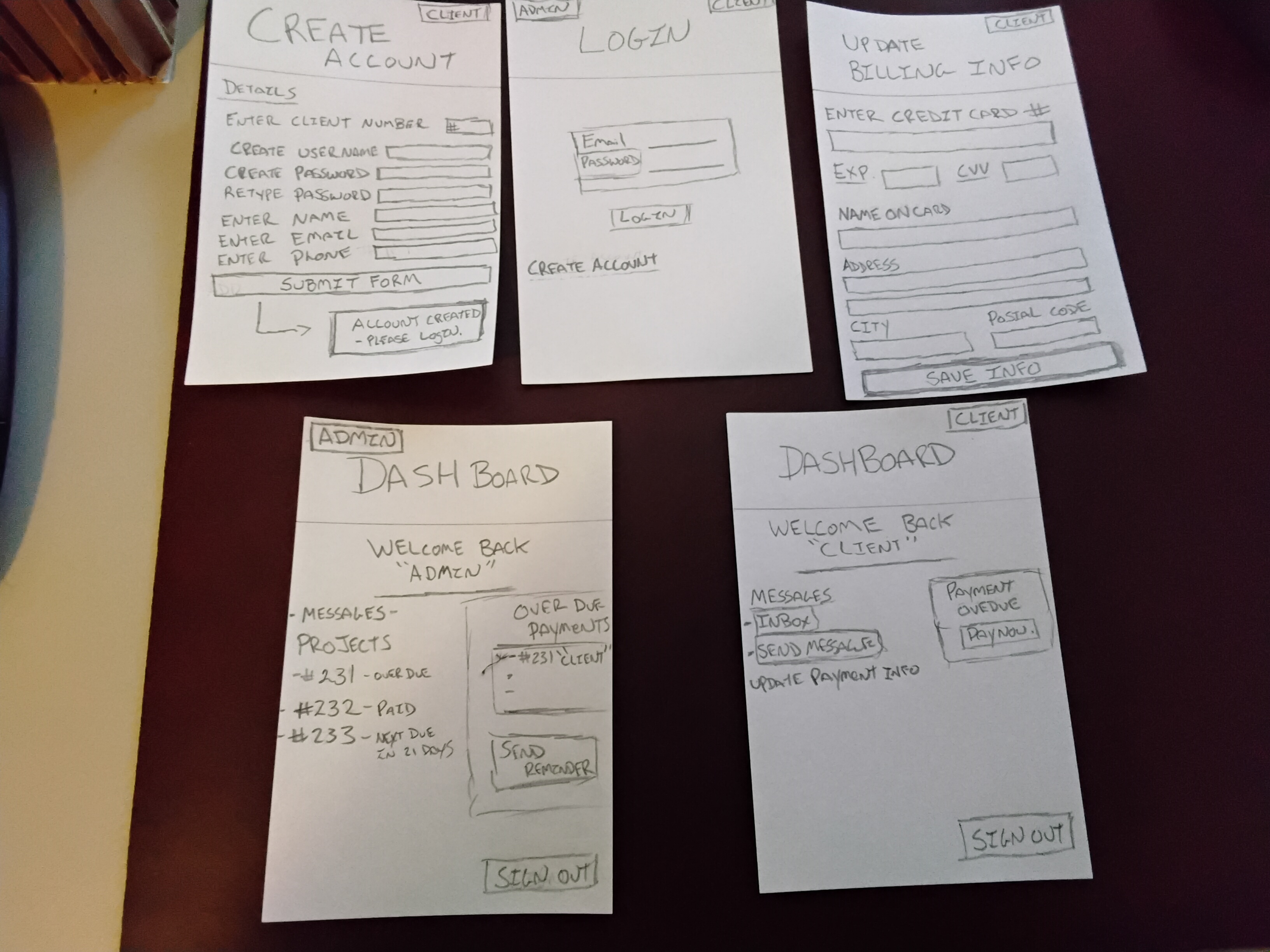
The prototypes focused on key platform features including account creation, login flow, billing information, project dashboards, messaging, and payment management for both clients and administrators. Creating these simplified screens made it easier to test navigation flow, organize information clearly, and identify areas that could be improved before building the final interface.
Getting Higher
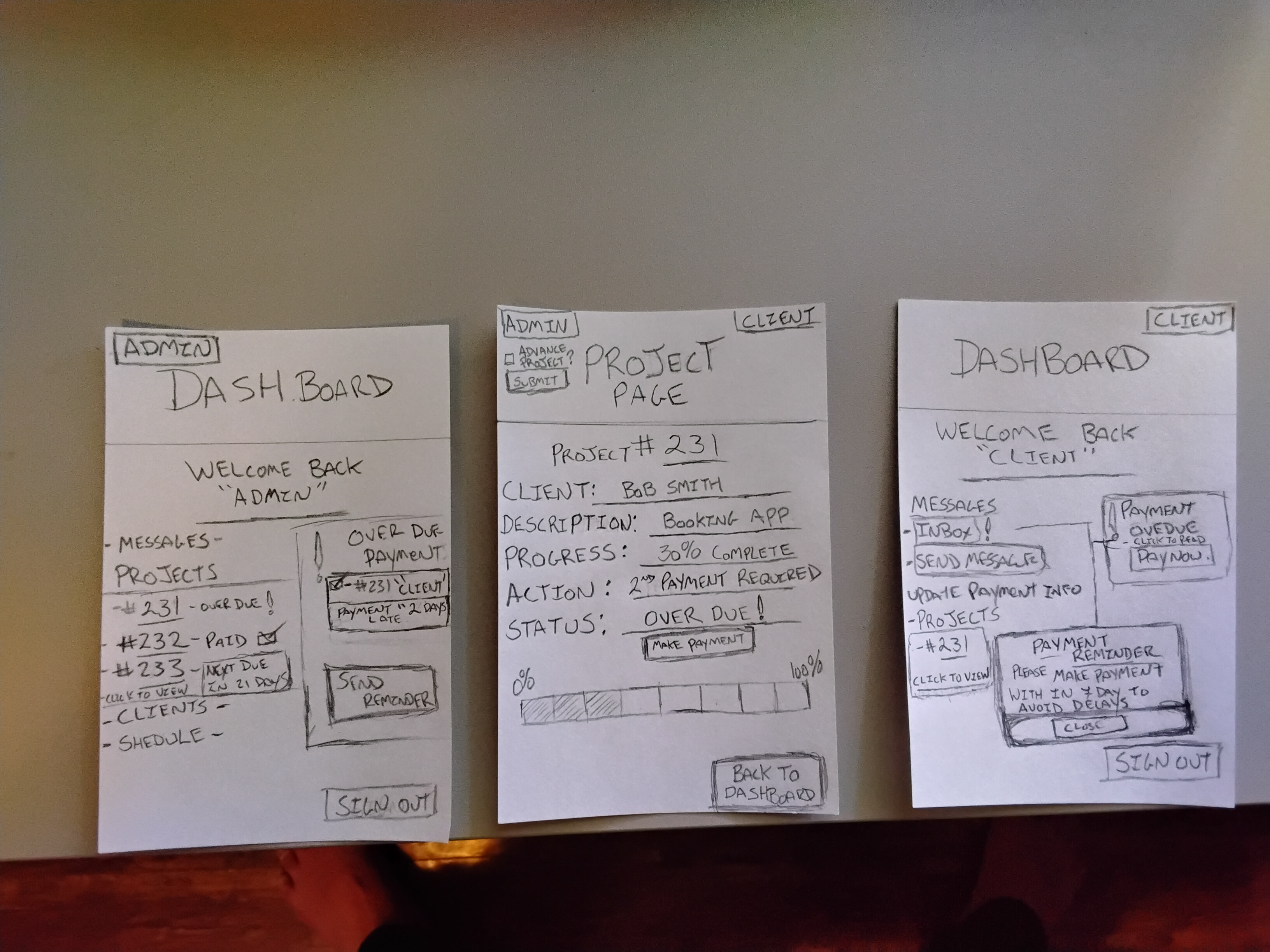
The final stage of the project focused on combining the ideas, layouts, and features developed throughout the design process into a more complete platform concept. These refined wireframes helped demonstrate how the application could function for both freelancers and clients by organizing messaging, project tracking, payments, and navigation into one connected experience.
High-Fidelity
High-fidelity mockups were created to visualize the final look and feel of the platform, incorporating detailed design elements, realistic content, and interactive components. These mockups served as a comprehensive guide for the development team to build the actual application.